

The basics
What black garlic actually is
Not fermented, despite the jar label: black garlic is whole garlic transformed slowly by weeks of gentle heat. What changes, and why it tastes this way.
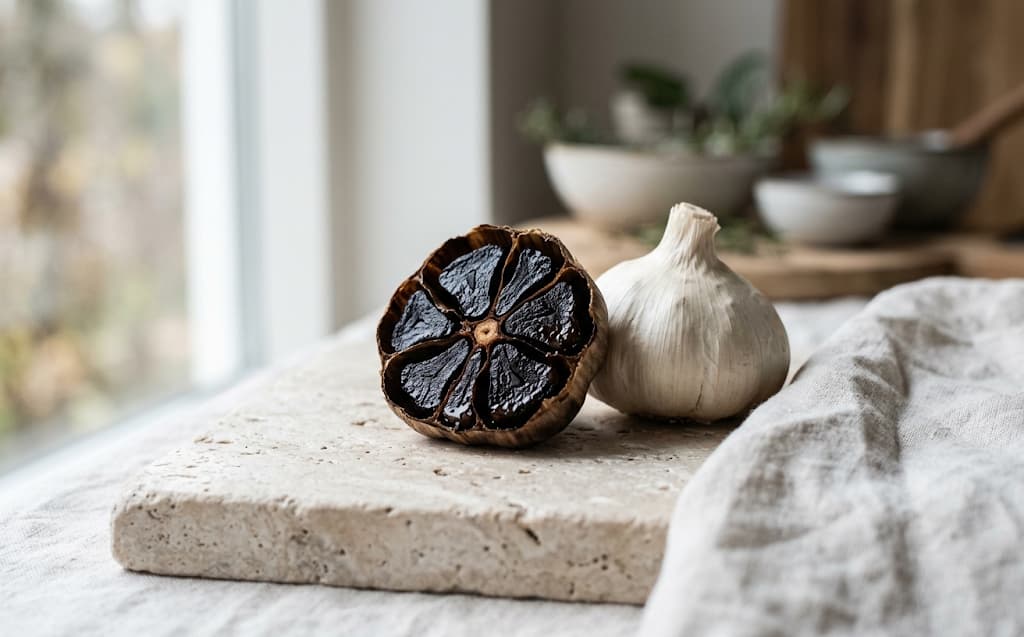
The short answer
Black garlic is whole garlic held at low heat — roughly 60–80 °C — and high humidity for several weeks. No additives, no burning, and despite the common label, no fermentation: there are no microbes doing the work. The cloves darken to black, soften to the texture of a dried date, and trade garlic's sharpness for something sweet, savoury and faintly balsamic.
What actually happens inside the clove
The transformation is the Maillard reaction in extreme slow motion — the same chemistry that browns bread crust and seared meat, run over weeks instead of minutes. Sugars and amino acids recombine into hundreds of new flavour compounds and dark melanoidin pigments. The harsh sulphur compounds that make raw garlic pungent break down along the way, which is why black garlic is gentle enough to eat straight.
What it tastes like
Molasses, tamarind, balsamic and a quiet savoury depth, with the texture of a soft dried fruit. It carries none of raw garlic's heat and does not linger on the breath. In the kitchen it behaves more like a condiment than an aromatic: mashed into butter, blended into dressings, or sliced over anything that wants depth.
Is it good for you?
We keep claims careful here. What the research literature describes is composition: the ageing process increases levels of certain antioxidant compounds, notably S-allyl cysteine, relative to raw garlic, while reducing the harsh sulphur compounds. We sell it for the flavour; anything more specific than that belongs to your own reading, and we are happy to point to the literature.