

What black garlic is
Garlic, made sweet by time
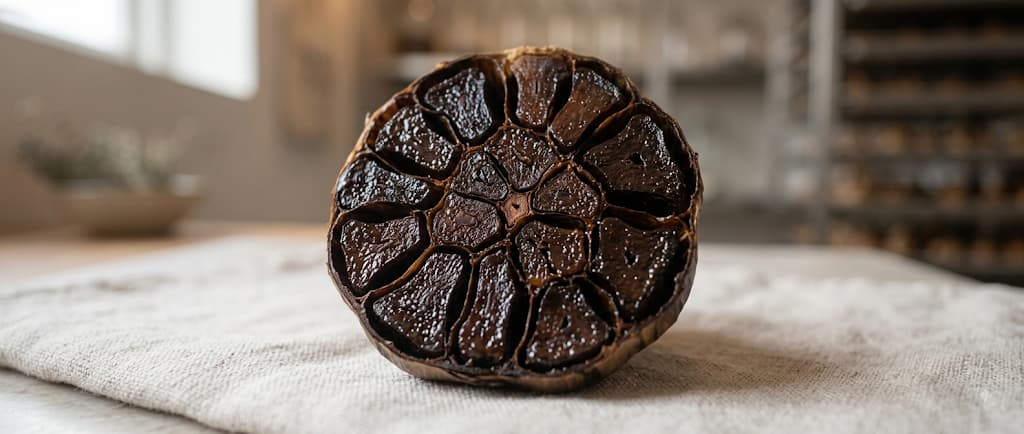
It starts as ordinary garlic. Weeks of gentle, even warmth turn the hard white cloves soft, glossy and black — and turn the bite into sweetness. It tastes closer to date, tamarind and aged balsamic than to anything raw. No harshness. No burn. None of the breath.
What it tastes like
Sweet, not sharp
Date, prune and a little tamarind. The raw heat is simply gone.
Balsamic depth
A dark, syrupy acidity that behaves like aged vinegar in a dish.
Savoury roundness
The umami note that makes a sauce taste finished without extra salt.
Soft as fudge
Spreadable straight from the skin — no chopping, no cooking out.
Why cooks keep it on the shelf
One ingredient, nothing else
Garlic and time. No sugar, no acid, no preservative — the whole label is one word.
No garlic breath
The compounds behind raw garlic's bite mellow during ageing, so it is easy to eat at lunch on a work day.
Naturally rich in antioxidants
Ageing raises the antioxidant content compared with raw garlic — one of the reasons it has been a staple in Asian kitchens for centuries.
Gentler to eat
Many people who find raw garlic harsh on the stomach get along with the aged version perfectly well.
Ready when you are
Keeps twelve months unopened, six weeks once opened. A clove lifts a dish in seconds.
How we make it
- One
Choose
We pick hardneck garlic — the kind with a stronger, sweeter clove — from our Baltic fields and trusted European growers. Everything is graded by hand before it goes in.
- Two
Warm
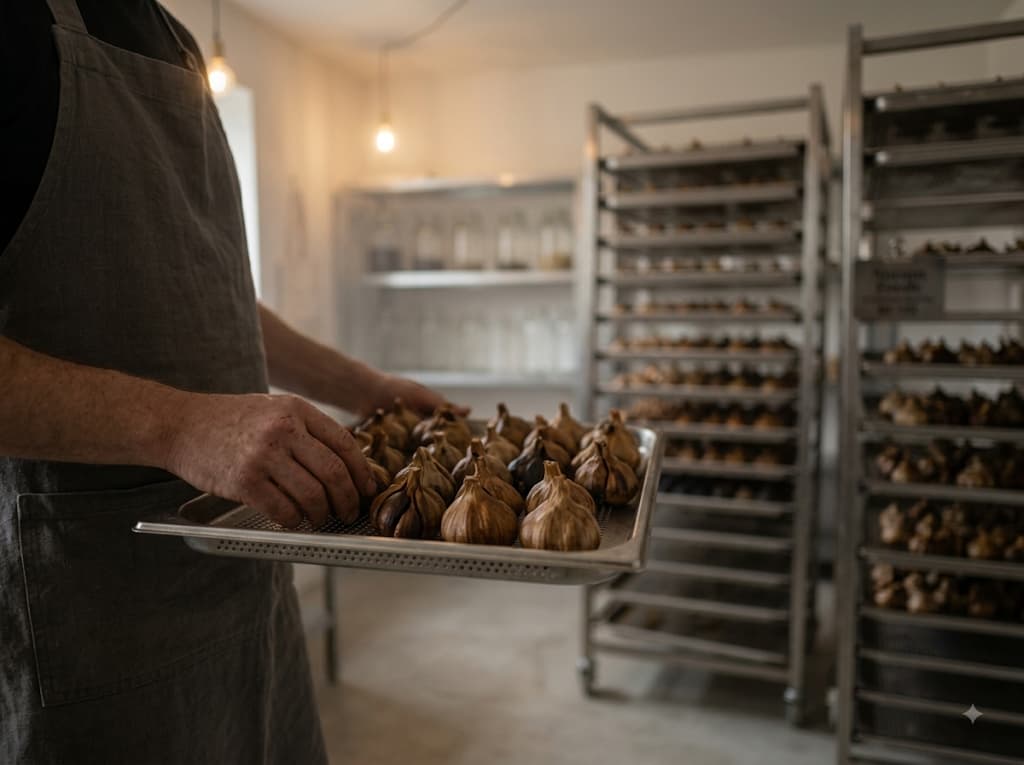
The bulbs go whole into warm, humid ageing rooms. No smoke, no starter culture, no additives. Just steady heat doing slowly what a pan does violently.
- Three
Wait
Over the following weeks the cloves darken, soften and sweeten. We taste our way to the end point rather than watching a clock — some formats are ready sooner than others.
- Four
Settle
A fortnight of resting lets the texture firm up and the flavour round out. Then it is sorted, checked, packed and given its batch code.
If you have never cooked with it
On bread
Squeeze a clove onto warm toast with good butter and salt.
In butter
Two cloves mashed into 100 g of butter — for steak, potatoes, corn.
Through pasta
Melt three cloves into the pan with oil and pasta water.
In dressing
A clove blended into vinaigrette replaces both mustard and sugar.
With cheese
Whole bulbs on the board next to a hard cheese and honey.
On the grill
Rub paste onto lamb or aubergine in the last minutes of cooking.
European fields, Baltic patience
Our own fields sit on light Baltic soils in northern Latvia and southern Estonia — cold winters, long summer light, a slow season that concentrates sugars in the bulb. Alongside them we buy hardneck garlic from growers elsewhere in Europe, chosen for variety and quality, so there is good garlic on the racks all year.
Wherever a bulb is grown, the slow part happens in one place: our fermentation rooms in Latvia. Every pack carries a batch code, so you can always ask where yours came from and when it was made.