

History
A short history of black garlic
From Korean and Japanese kitchens to the tasting menus of Europe: how a slow transformation of the world's most common allium became a pantry staple.
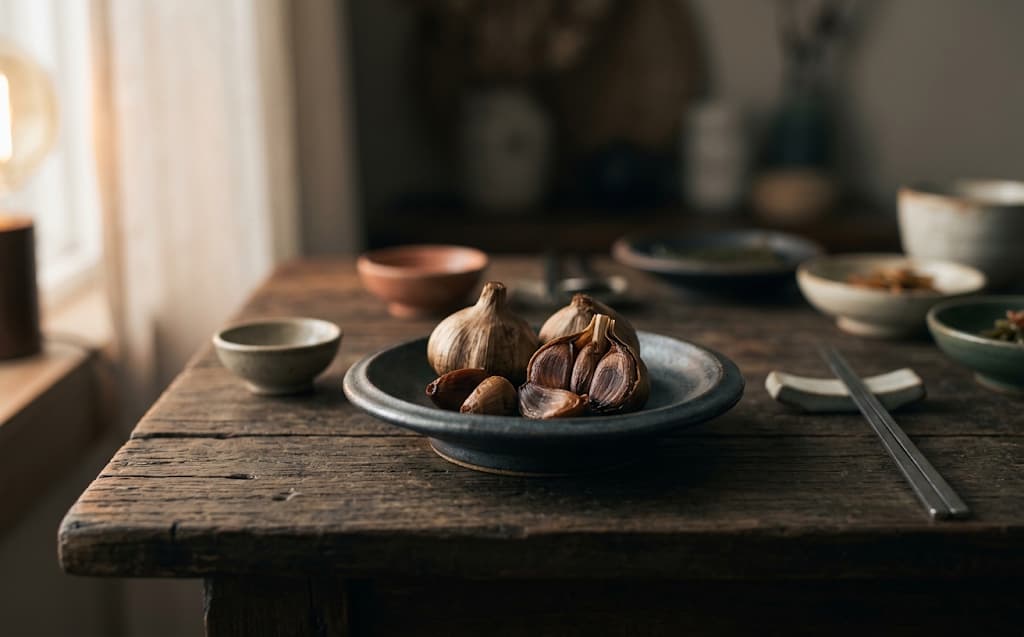
Older than the hype, younger than the legend
Black garlic is often introduced with claims of thousand-year-old tradition. The honest history is shorter and more interesting: aged garlic preparations appear in Korean and Japanese foodways, but black garlic as we know it — whole bulbs aged to black in controlled warmth — was developed and popularised in the early 2000s, first in Korea and Japan, and reached Western restaurant kitchens within the decade.
How it conquered the tasting menu
Chefs adopted it fast because it solves a real problem: it delivers garlic's savoury depth without its aggression, and it holds its own against sweetness, acid and fat. Through the 2010s it moved from fine dining to serious home kitchens — the trajectory miso and gochujang took a generation earlier.
Why we make it in the Baltics
Garlic grows well across Europe, and the transformation asks only for patience and precise, gentle warmth — which is an engineering problem, and engineering is where we started. We age EU-grown garlic today and add our own bio-certified growing from 2027, planted against demand we can already measure.